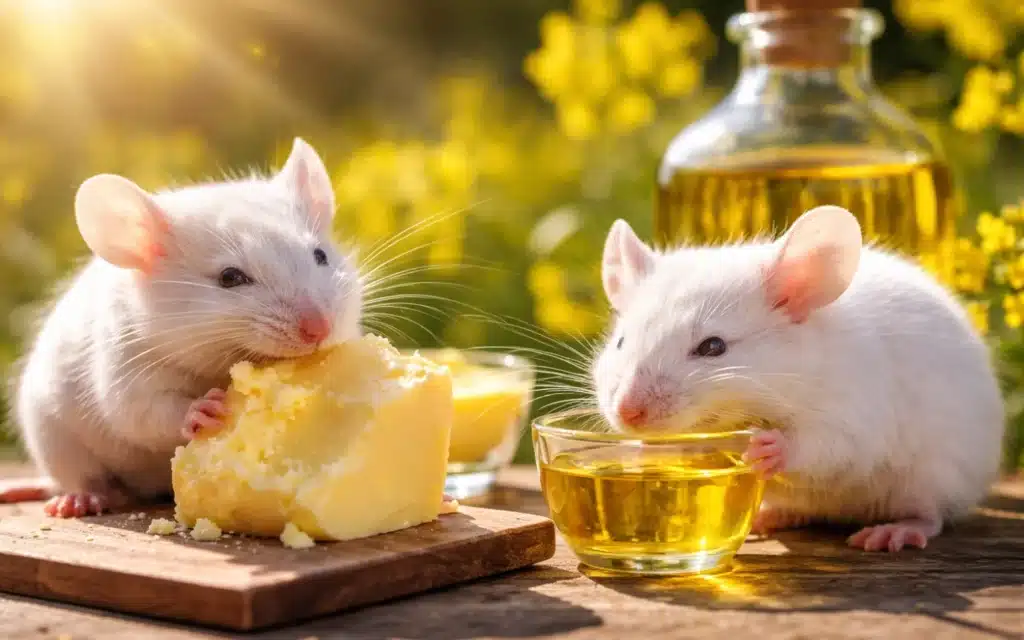
An Australian study from 1988 showed that mice fed saturated fat became virtually immune to cancer-causing UV rays – while the same UV exposure in mice fed polyunsaturated fat led to massive tumor growth. What really happens to the skin when we choose the wrong fat?
The impact of diet on skin
The impact of diet on UV-induced skin cancer has long been an area of interest in medical research. In the 1980s, researchers began to explore how different nutrients, particularly fats, could influence the body’s response to ultraviolet radiation from the sun. A groundbreaking 1988 Australian study specifically investigated how the type of fat in the diet affected the development of skin tumors in mice exposed to simulated solar radiation. This research challenged prevailing beliefs about the role of fats in health and highlighted an unexpected link between dietary lipids and cancer development. Today, we know that UV radiation is a primary cause of skin cancer in humans, but the modulatory effects of diet are still an area of ongoing debate. The study showed that fat is not only a source of energy but can also influence cellular processes such as inflammation and tumor promotion, making it relevant to both nutrition and dermatology.
Link between fat, cell membranes and DNA damage
Any exposure to UV radiation damages skin cells at the DNA level, which can lead to mutations and eventually cancer. The skin’s protective mechanisms, such as melanin and antioxidants, play a role, but external factors such as diet can enhance or attenuate these effects. Dietary fat is integrated into cell membranes, affecting their fluidity and how cells respond to stressors such as UV light. The quality of the fat – whether it is saturated or polyunsaturated – determines how the membranes behave under oxidative stress, a key component of UV damage. When fat balance is optimal, cells can repair damage more efficiently, while imbalance can accelerate the damage process and promote tumor growth.

Different types of fat in the study
The study focused on the differences between saturated and polyunsaturated fats, which have distinct chemical structures and biological roles. Mice were fed isocaloric diets, meaning that calorie intake was the same but fat composition was varied to isolate the effects of lipid type.
- Saturated fat , consumed in a diet with 20% saturated fatty acids, was shown to provide strong protection against UV-induced tumor development. It contributes to stable cell membranes and reduces susceptibility to oxidative damage. In the study, saturated fat came from sources similar to animal products, and it inhibited the promotion phase of cancer development.
- Polyunsaturated fat, in a diet with 20% polyunsaturated fatty acids such as sunflower oil, significantly increased the number of tumors in UV-exposed mice. These fats are more reactive and can promote inflammation and lipid peroxidation, which exacerbates UV damage. The levels of 5% and 20% polyunsaturated fat showed no quantitative difference, but the qualitative effect was clear compared to saturated fat.
Prerequisites
All fat types were tested in a controlled experiment with hairless albino mice (Skh:HR-1), which are sensitive to UV radiation due to the lack of fur and pigment. The mice were exposed to simulated solar radiation with a mixture of UVA and UVB, corresponding to natural sun exposure. The results highlighted that it is not the amount of fat but the type that plays a role in UV carcinogenesis. The interaction between fats and UV radiation affects not only the skin but potentially the whole body’s response to environmental factors.
Results from the study
Skin tumors developed more rapidly and in greater numbers in mice on a polyunsaturated fat diet. The saturated fat group was almost completely protected during the exposure period, with few or no visible tumors. When these mice were later switched to a polyunsaturated fat diet, multiple latent tumors appeared, indicating that saturated fat inhibits tumor promotion but not necessarily the initiation of damage. This suggests that polyunsaturated fats are required to “activate” latent tumors, perhaps by increasing inflammation or cell proliferation.
The immune system is also affected by fat composition in relation to UV radiation. Polyunsaturated fats can generate pro-inflammatory eicosanoids, which exacerbate UV-induced immunosuppression, a known risk factor for skin cancer. Saturated fats, on the other hand, appear to stabilize the immune response and reduce oxidative stress in the skin.
The study also highlighted the role of diet in the absorption of protective nutrients. UV radiation increases the need for antioxidants such as vitamin E, which is fat-soluble and better absorbed with saturated fats. Without the right balance of fats, the skin cannot effectively protect itself against free radicals generated by UV light.
At the cellular level, fat affects the function of mitochondria in skin cells. UV radiation damages mitochondrial membranes, and polyunsaturated fats make them more vulnerable to peroxidation, while saturated fats offer better resilience and energy metabolism.
The study did not emphasize the amount of fat in total, but the degree of saturation: saturated fat (stable, hydrogenated) protected, while polyunsaturated fat (reactive, from sunflower oil) significantly increased the risk associated with UV radiation. This has often been interpreted in later discussions as an effect of oxidation-sensitive polyunsaturated fats (especially linoleic acid) exacerbating oxidative stress and inflammation in the skin.
Diet in the context of UV exposure
Natural fats from whole foods, which were simulated in the study through controlled diets, interact differently with UV radiation than processed fats. Mice on a saturated fat diet showed better skin integrity, while polyunsaturated fats from vegetable oils increased the risk. This has implications for human health, especially in sunny areas like Australia, where the study was conducted. When the diet is balanced with a focus on saturated fats, it can become a protective factor against UV damage, rather than a risk. The study shows that fat is not an enemy in the fight against skin cancer but a potential ally if chosen correctly.
Fatty acid balance and UV risk
Many modern diets are rich in polyunsaturated fats from processed oils, which the study suggests can increase UV sensitivity, creating an inflammatory environment that promotes cancer development.
Can we apply these findings in everyday life?
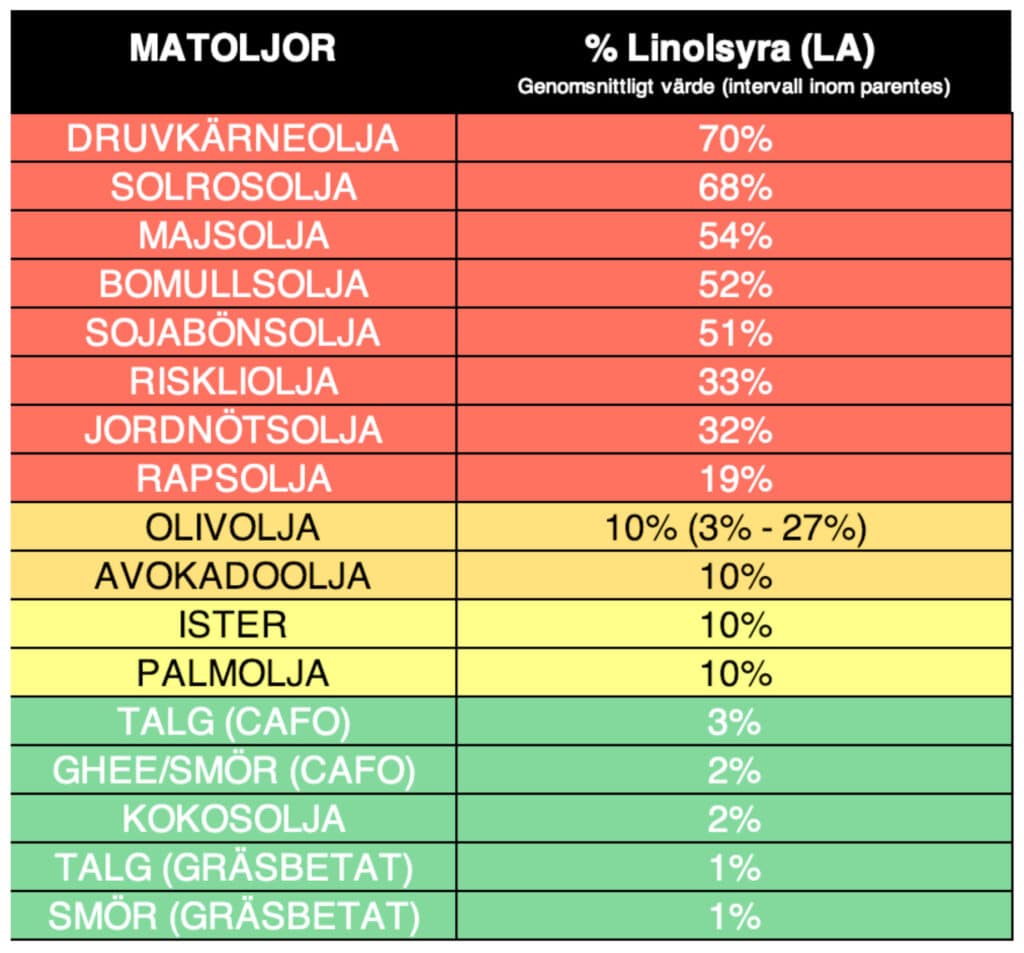
Linoleic acid, an omega-6 fatty acid found in polyunsaturated fats, was identified in the study as a potential risk factor. Here is a table showing the linoleic acid content of some common types of oil.
It is important to remember that this is an animal study, and that the results cannot be directly translated to humans. However, the study provides an interesting insight into how fatty acids can play a role in the body’s complex systems. Neokliniken does not provide medical advice. In case of illness – contact a doctor.
What can you do – practically speaking – if you want to eat less polyunsaturated fats?
Read the article “Fat in the shopping cart” for tips on what you can do in everyday life.
Reference
Effect of dietary lipid on UV light carcinogenesis in hairless mouse (1988)
https://pubmed.ncbi.nlm.nih.gov/3241840/
https://onlinelibrary.wiley.com/doi/abs/10.1111/j.1751-1097.1988.tb02882.x