When knowledge is put into practice, it doesn’t have to be complicated. Quite the opposite. A good way to think is to let the body be the answer.
This is how you think about fat when you shop
When you are in the store:
Choose fats that the body recognizes and has used for a long time in its evolution.
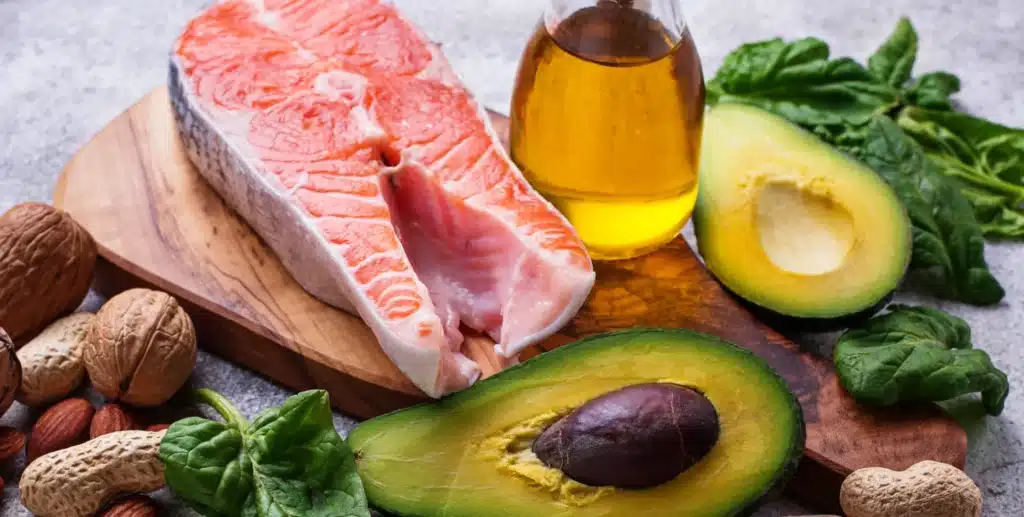
Fats that come from whole foods – fish, olives, avocados, nuts, seeds, butter, meat and natural oils – tend to act as building blocks rather than burdens. They contain fatty acids in forms that cell membranes, hormones and the nervous system can use without having to compensate or “clean up” afterwards.
Quick info
A simple first step is to read the ingredients list. A good fat rarely needs to be explained in several lines of text. The shorter and more understandable the ingredient list, the greater the chance that the fat is still biologically intact. When you have removed natural fat from the product, you often need to add sugar/carbohydrates in various forms to get the taste. So it might be an idea to look for unnecessary sugar in the form of, for example, dextrose, glucose, glucose syrup or other. Choose something that has a shorter ingredients list.
Also consider balance
In practice, this means making olive oil, fat from meat, avocado and natural fats the basis of your everyday life, while regularly adding omega-3 from fatty fish or marine sources. At the same time, it is wise to be more restrained with refined vegetable oils that are often found in ready-made foods, snacks and industrial baked goods – not because fat is dangerous, but because these fats easily disrupt the interaction between the body’s fatty acids.
Another useful benchmark is heat stability. Fats that are easily damaged by heat and light are more sensitive in the body. Use stable fats for cooking and save more sensitive oils for cold use.
A simple rule of thumb
If you want to take away just one thing from this article, let it be this:
Choose fats that act as building materials – not as a burden.
The closer a fat is to its natural origin, the better the body can use it for energy, signaling and recovery.
When the fat quality is right, the body doesn’t need to defend itself. Instead, it can build, regulate, and function – just as it’s meant to.
Fatty acid balance
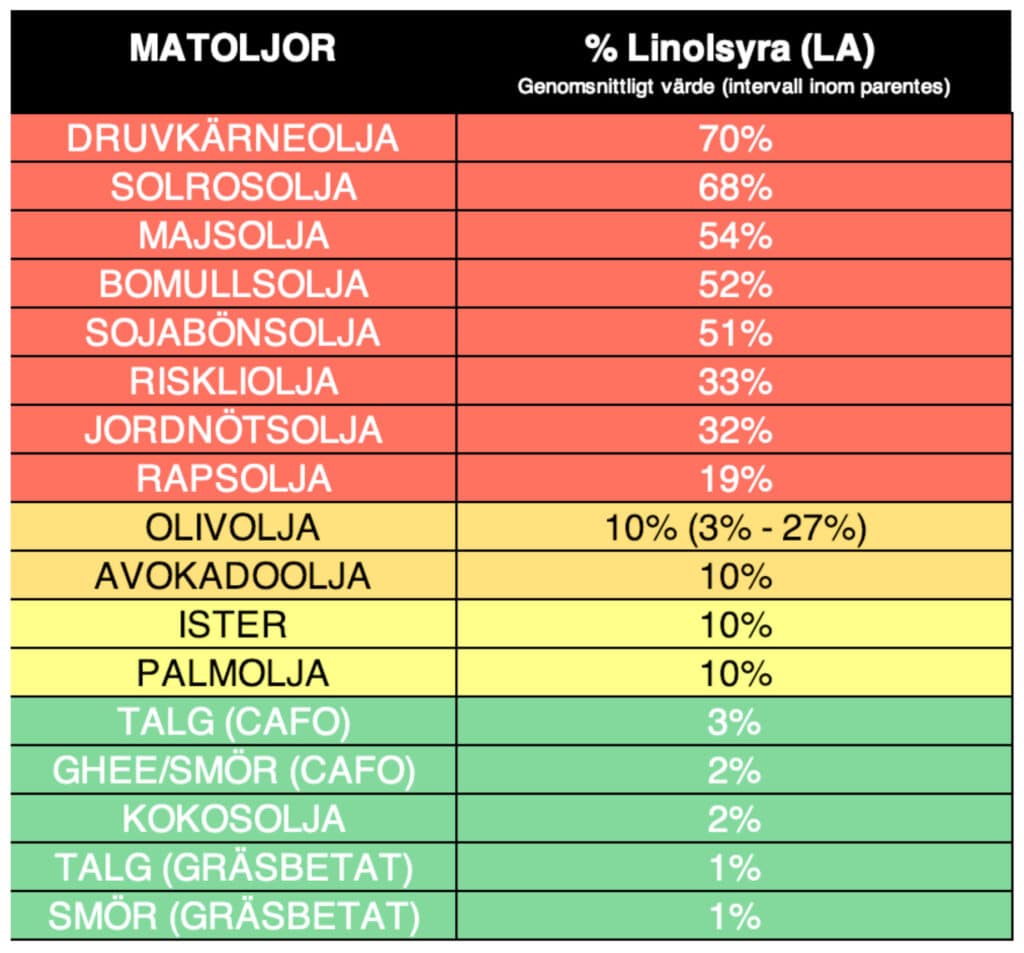
Many of the fat sources we use today are artificially produced, even though they are presented as coming from regular agricultural products. This can cause the body to be burdened by an imbalance in fatty acids, which can create inflammatory processes.
How can I know which fats are more or less healthy?
Linoleic acid is often cited as the fatty acid that “tips the balance.” Here is a table showing the linoleic acid content in some common types of oil.
Reference
- Dietary Guidelines for Americans, 2025–2030 (official document from USDA/HHS). The advice emphasizes that limiting processed foods helps keep saturated fat low, and includes tallow as a natural alternative. Evidence base: The guidelines acknowledge the need for more research on fat types, but are based on studies that show benefits of whole foods over processed foods (e.g., reduced risk of chronic disease). This supports the shift away from refined oils.
- Fact Sheet: Trump Administration Resets US Nutrition Policy (2026, from HHS/USDA). Describes the guidelines as a “reset” toward real food, including healthy fats from whole sources and avoiding processed products. Supports advice to prioritize olive oil but allow tallow, based on “gold standard science” to reduce chronic disease.
- Perspective on the Health Effects of Unsaturated Fatty Acids and Commonly Consumed Plant Oils High in Unsaturated Fat (2024, published in the British Journal of Nutrition ). Supports advice on unsaturated fats from plant oils, but the guidelines use this to prioritize olive oil over highly refined ones such as corn oil. Studies show that switching to natural fats reduces the risk of heart disease and diabetes.
- The Evidence Behind Seed Oils’ Health Effects (2025, from Johns Hopkins). Confirms that vegetable oils lower LDL compared to tallow, but the guidelines emphasize holistic patterns and avoidance of processed oils. Supports the shift by noting that animal fats are not always worse in moderate amounts.