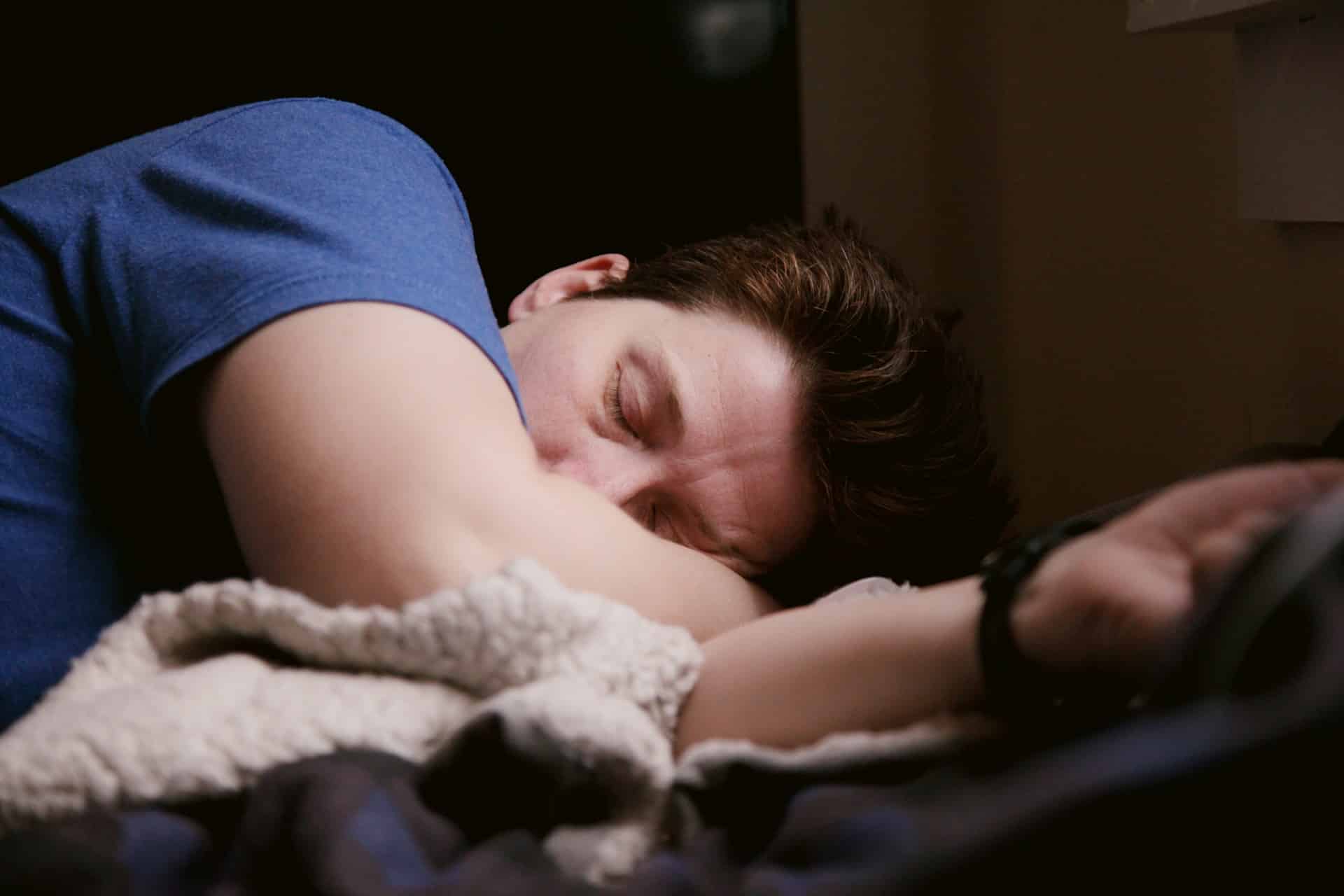
What does an exhausted employee really cost?
Sick leave is often the first thing companies see.
But in reality, that’s rarely where the problem begins.
Long before an employee is on sick leave, small signals are often visible:
• energy decreases
• focus becomes worse
• creativity decreases
• recovery fails
• the stress becomes constant
• performance begins to require more energy than before
And this is where the real costs start to arise.
Sweden is becoming more and more sick leave
In Sweden, between 620,000–630,000 people receive sickness benefit each year, according to the Swedish Social Insurance Agency.
In addition, around 600,000 applications for sickness benefit are received by the Swedish Social Insurance Agency every year.
It is important to understand that these figures primarily apply to sick leave lasting longer than 14 days.
The large amount of short-term sick leave is often not even visible in the statistics.
Would you like to explore how a more preventive perspective could
be able to look in your organization ?

- You get a clear overview of the current situation and patterns
- The analysis helps us understand what the body is trying to signal and where it may need more support.
- The process takes place at a leisurely pace, with respect for the body's own rhythm.
Short-term sick leave – the hidden cost
During the first 14 days, the employer pays sick pay.
These periods of illness are therefore not registered as regular sick leave with the Swedish Social Insurance Agency.
This means that many companies are facing a much greater burden than the official figures show.
Short-term absence can often be an early sign of:
• stress
• low recovery
• overload
• sleep problems
• mental exhaustion
And even if each absence is short, the total cost is often large due to:
• loss of production
• redistribution of work tasks
• poorer continuity
• higher load on the team
• reduced efficiency
Mental health drives development
The majority of today’s longer sick leave in Sweden is linked to psychiatric diagnoses and stress-related ill health.
Over the past five years, stress-related sick leave has increased by approximately 25%.
How much does sick leave cost?
According to several estimates, a longer sick leave can cost the employer between
SEK 50,000–150,000 per month when including:
• loss of production
• recruitment
• temporary workers
• lead time
• skills gap
• deteriorated team dynamics
• reduced efficiency of colleagues
But the biggest cost is often difficult to measure:
When high competence slowly loses capacity without anyone catching it in time.
The workplaces of the future will measure sustainable performance
Previously, working life was mainly about performance.
Now more companies are starting to understand that sustainable performance is what determines long-term success.
It’s not just about avoiding sick leave.
It’s about creating conditions for people to function over time.
Organizations that work preventively around energy, recovery and the work environment often receive:
• higher engagement
• better focus
• lower staff turnover
• stronger employer brand
• more stable performance over time
Prevention is almost always cheaper than rehabilitation
Once the body says stop, the strain has often lasted a long time.
That’s why more and more companies are choosing to work more proactively with health and work environment – before the problems become acute.
At Neokliniken, we work with a holistic perspective on energy, stress and recovery, where the goal is to help people understand the body’s signals before they develop into larger problems.
For many companies, it is no longer about:
“Can we afford to work preventively?”
But rather:
“Can we afford not to?”
Do you want to create a more sustainable workplace?
We help companies and organizations create dialogue around:
– stress and recovery
– sustainable performance
– preventive health
– early signals of overload
Symptoms are signals, not enemies
At Neokliniken we see symptoms as information .
They tell us something about how the nervous system is regulating right now.
When the body is given the right conditions – safety, understanding and support – it can begin to release old patterns. Regulation does not occur through pressure, but through calm.
An example many recognize:
After a period of deadlines or high workload, you wake up in the middle of the night with thoughts racing. The body keeps you awake to be ready. It does its job. But with the right signals of reassurance, the system can gradually return to rest.

Interesting review of the body and mind in a calm environment. The dizziness has improved significantly but is not completely gone. I have had a lot of pain in my right foot that required painkillers almost daily, but it has improved a lot. ... Sleep problems have decreased. I also experience inner peace in my work as I have had clarity of thought and the power to act in emergency situations. Am so grateful ❤️
Karin Nelson