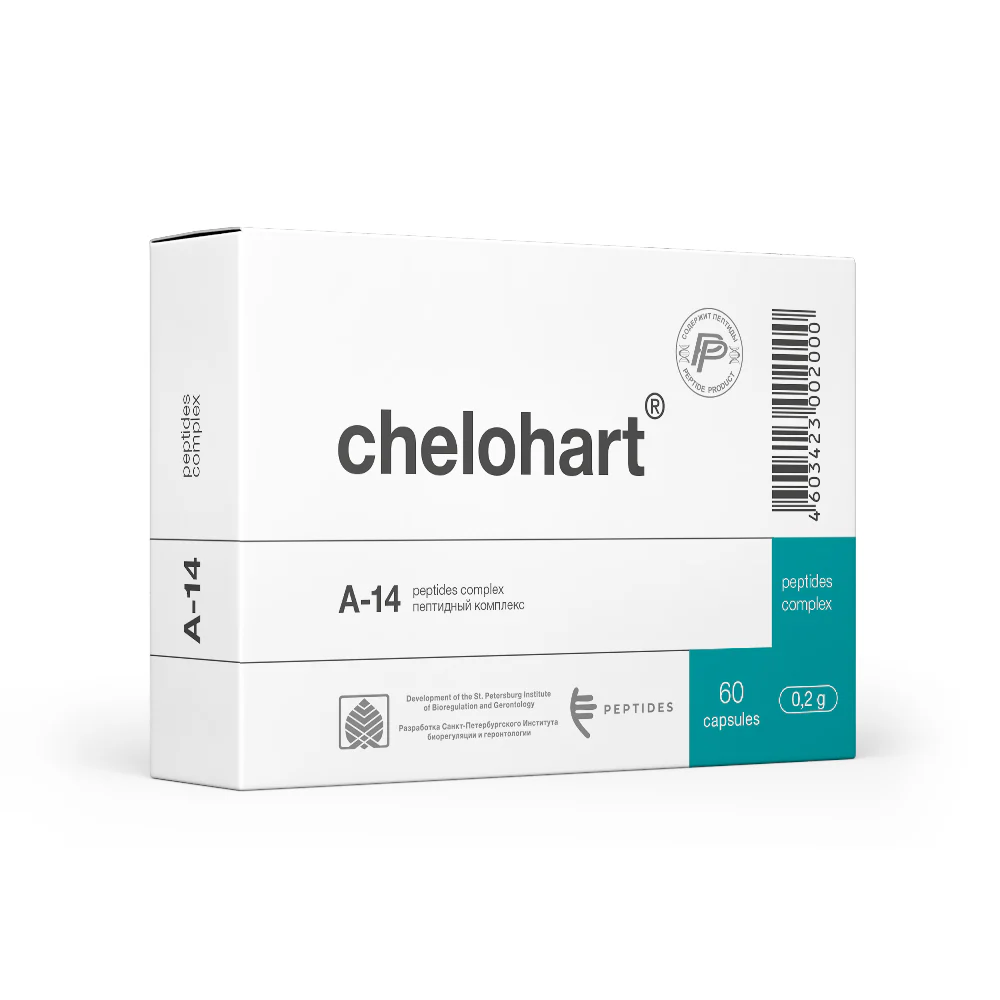
From laboratory bench to military medicine
In the 1970s, the young military doctor Vladimir Khatskelevich Khavinson (1946–2024) worked at the Military Medical Academy in Leningrad. The task was practical: how to keep soldiers, submarine crews and personnel functional under extreme stress, radiation and exhaustion? Together with Vyacheslav Morozov, he isolated low molecular weight peptides from animal organs – first the thymus, then the pineal gland, cerebral cortex, retina and prostate.
The idea behind
The idea was simple and radical at the same time: if an organ ages or fails, short peptides from the corresponding tissue can help the same organ system regain more normal function. Later, it was formulated as peptide bioregulation – that di-, tri- and tetrapeptides can influence gene expression in the tissue they “belong to”. Khavinson became the head of the St. Petersburg Institute of Bioregulation and Gerontology, an academician of the Russian Academy of Sciences and one of the country’s most famous gerontologists. He died in 2024, aged 77.
FACTBOX PROFESSOR KHAVINSON

Professor Vladimir Khavinson
- Born November 27, 1946
- Died January 6, 2024
- Military doctor, later professor and academic
- Head of the Institute in Saint Petersburg
- Approximately 775 scientific publications and around 196 patents
- More than sixty peptide products introduced as biologically active dietary supplements in Russian practice
What is a peptide bioregulator?
A peptide is a short chain of amino acids. Proteins are long chains. The bioregulators in the Khavinson family are extremely short: usually two, three or four amino acids. They should not be confused with today’s injectable research peptides such as BPC-157 or growth hormone-like substances . The bioregulators came in two generations:
- Organ extract – complex of many peptides from, for example, calf thymus (Thymalin) or pineal gland (Epithalamin).
- Synthetic short analogues – a single defined sequence, for example Vilon (Lys-Glu), Thymogen (Glu-Trp), Epitalon (Ala-Glu-Asp-Gly) and Crystagen (Glu-Asp-Pro).
The hypothesis is that the short chains can reach the cell nucleus and influence which genes are turned on or off in a particular tissue. It is a research idea supported by the group’s own cell and animal studies.
What were the peptides used for?
The first preparations were developed for military and occupational medicine: impaired immune defense, radiation, toxic load, trauma and recurrent infections. Thymalin was registered in 1982. In the group’s own descriptions, similar preparations have also been linked to work with, among other things, personnel after nuclear accidents. The six most well-known peptides in Russian practice were, in brief:
- Thymalin – thymus, immune regulation
- Thymogen – synthetic dipeptide for immune function
- Epithalamin – pineal gland, endocrine regulation and melatonin
- Cortexin – cerebral cortex, brain function
- Retinal lamina – retina
- Prostatilen/Samprost – prostate
The synthetic short peptides and oral complexes were then sold in capsules, drops and oral solutions as biologically active food supplements. Animal studies from the same research environment reported, among other things, longer life expectancy and lower tumor incidence. In an often cited long-term follow-up of elderly people who received thymus and pineal gland peptides, lower mortality was reported than in the control group.
Fact box: Proposed target organs for some of the 64 peptide regulators
Bioregulator
Origin
Attributed system
Crystagen / Thymogen
thymus extract or short immune peptides
immune system
Epitalon / Epithalamine
pineal gland
circadian rhythm, melatonin, aging
Pinealon / Cortagen
brain
nervous system
Vesugen / Ventfort
vascular system
Superfort
pancreas
pancreas
Libido / Testoluten
prostate tissue
prostate, libido
How many studies are there on Khavinson’s peptides?
The volume is large. Khavinson has authored about 775 scientific publications. The program as a whole has, over more than forty years, given rise to several hundred articles: cell culture, animal models, gene expression, and clinical observations. PubMed indexes several hundred entries on Khavinson and peptides; the Russian-language section is larger than what is visible in English.
Peptide bioregulators are dietary supplements
Peptide bioregulators are not “peptides in general”. They are a specific Russian product family: first organ extracts for military and clinical use, then short synthetic analogues. 64 products were introduced as biologically active dietary supplements. This is the form that most consumer products have taken: oral capsules and drops, often in short courses a few times a year. They are peptide-based dietary supplements, not approved drugs in the EU. They are not a substitute for medical care and they are not marketed with claims of curing or preventing disease.
Important information
The article is popular science information, not medical advice and not a call to buy or use peptides.
- Khavinson peptides are dietary supplements.
- The research base is extensive and comes mainly from Russia.
- Consult a licensed physician in case of illness, pregnancy or ongoing treatment.
Neokliniken is not responsible for how the information is interpreted or used. The text does not create a contractual relationship and no treatment guarantees.
References (limited selection)
- Khavinson VKh. Peptides and Aging. Neuroendocrinology Letters. 2002;23 Suppl 3:11–144.
- Anisimov VN, Khavinson VK. Peptide bioregulation of aging: results and prospects. Biogerontology. 2010;11(2):139–149.
- Khavinson VKh, Morozov VG. Peptides of pineal gland and thymus prolong human life. Neuro Endocrinol Lett. 2003;24(3–4):233–240. PMID: 14523363.
- Korkushko OV, Khavinson VKh, Shatilo VB, Antonyk-Sheglova IA. Peptide geroprotector from the pineal gland inhibits rapid aging of elderly people: results of 15-year follow-up. Bull Exp Biol Med. 2011;151(3):366–369.
- Khavinson VKh, Anisimov VN. 35-year experience in research of peptide regulation of aging. Adv Gerontol. 2009;22(1):11–23. PMID: 19827673.
- Khavinson VK, Kuznik BI, Ryzhak GA. Peptide bioregulators: a new class of geroprotectors. Report 2. Clinical study results. Adv Gerontol. 2013;26(1):20–37. PMID: 24003726.
- Khavinson VK, Lin’kova NS, Tarnovskaya SI. Short peptides regulate gene expression. Bull Exp Biol Med. 2016;162(2):288–292.
- Khavinson V, Popovich IG, Linkova NS, et al. Peptide regulation of gene expression: a systematic review. Molecules. 2021.
- Avolio F, Martinotti S, Khavinson VK, et al. Peptides regulating proliferative activity and inflammatory pathways in the monocyte/macrophage THP-1 cell line. Int J Mol Sci. 2022;23(7):3607. PMID: 35408963.
- Khavinson V, Linkova N, Diatlova A, Trofimova S. Peptide regulation of cell differentiation. Stem Cell Rev Rep. 2020;16(1):118–125.
- Review on Thymalin and constituent peptides including EDP/Crystagen: The Use of Thymalin for Immunocorrection and Molecular Aspects of Biological Activity. PMC8365293.
- Ryzhak GA, et al. Main scientific achievements of the academician of the RAS Vladimir Kh. Khavinson: peptides and aging. Medical Academic Journal. 2024.
- Wikipedia / institute biographical information on publication and patent numbers: Vladimir Khavinson (always check against primary source).