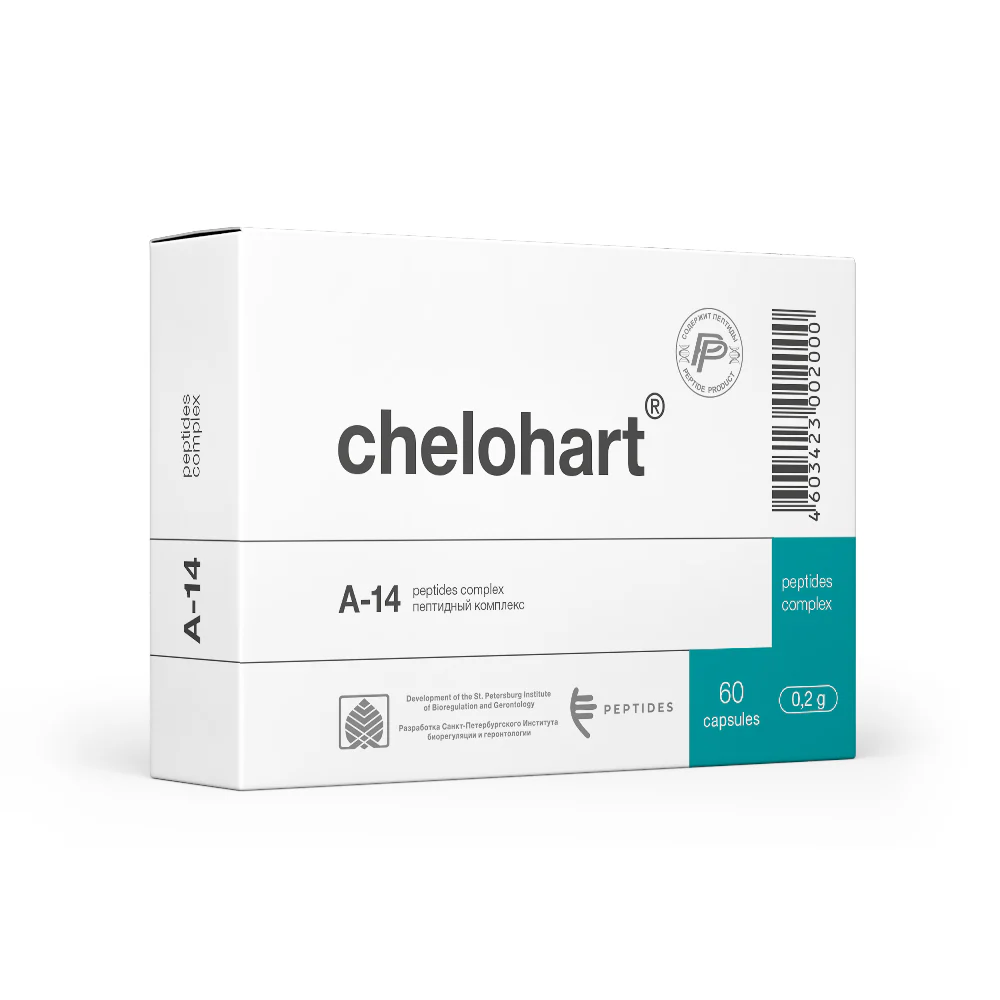
Epitalon , also spelled *Epithalon* or *Epithalone*, is a synthetic tetrapeptide primarily known from research on aging and peptide bioregulation. The peptide consists of four amino acids – alanine, glutamic acid, aspartic acid and glycine – and is often abbreviated AEDG .
The name is often confused with Epithalamin , which is not exactly the same thing. Epithalamin refers to a peptide complex/extract originating from pineal gland tissue, while Epitalon is the defined short synthetic peptide that was developed from this line of research.
Epitalon, Epithalon and Epithalamin – the difference
Epitalon and Epithalon are used in practice as name variants for the synthetic tetrapeptide AEDG. Epithalamin, on the other hand, is a more complex biological preparation from pineal tissue.
This is important in research reading because results from a tissue extract cannot automatically be attributed to a single synthetic peptide – and vice versa.
Epitalon, Epithalon and Epithalamin – the difference
Epitalon and Epithalon are used in practice as name variants for the synthetic tetrapeptide AEDG. Epithalamin, on the other hand, is a more complex biological preparation from pineal tissue.
This is important in research reading because results from a tissue extract cannot automatically be attributed to a single synthetic peptide – and vice versa.
Epitalon and telomerase
A frequently cited study from 2004 reported that Epithalon in cultured human fibroblasts increased telomerase activity, lengthened telomeres, and enabled the cells to undergo more divisions than control cells.
It’s an interesting laboratory finding, but a cell culture is not a human being. The result does not in itself prove that taking Epitalon extends human life or prevents age-related disease.
Epitalon and telomerase
A frequently cited study from 2004 reported that Epithalon in cultured human fibroblasts increased telomerase activity, lengthened telomeres, and enabled the cells to undergo more divisions than control cells.
It’s an interesting laboratory finding, but a cell culture is not a human being. The result does not in itself prove that taking Epitalon extends human life or prevents age-related disease.
Melatonin and circadian rhythm
Epitalon has also been studied in older rhesus monkeys, where researchers reported changes in melatonin and cortisol patterns. The pineal gland and melatonin are part of the background why Epitalon has received a lot of attention in the longevity field.
Again, these are specific experimental models. It is not the same as Epitalon being an established treatment for sleep problems in humans.

Epitalon and longevity
There are animal studies where Epitalon has been linked to changes in lifespan or age-related markers, including in fruit flies and mice. A modern review article from 2025 reviews a large number of experimental findings.
The crucial question for the consumer, however, is clinical: are there robust, independent, randomized studies in humans that show a clear benefit and map long-term safety? The evidence is considerably weaker there than many commercial longevity sites suggest.
Is Epitalon a proven anti-aging treatment?
No, it is not reasonable to describe Epitalon as a proven method for slowing human aging. Experimental results can be hypothesis-generating and biologically interesting without an intervention being ready for clinical routine.
Be skeptical of promises of extended lifespan, rejuvenation, or treatment of disease that are based directly on cellular or animal data.
Online security and products
The fact that a molecule can be ordered online says nothing about product quality, purity or suitability. Furthermore, preparations sold as “research peptides” may be outside the quality control that applies to approved drugs.
Neokliniken’s article is knowledge information and not a dosage guide. Medical decisions should be made in conjunction with a licensed healthcare professional.
Frequently asked questions
Are Epitalon and Epithalon the same thing?
The names are usually used for the same synthetic tetrapeptide AEDG. Epithalamin, on the other hand, is a peptide complex from pineal tissue.
What does Epitalon consist of?
Epitalon is a tetrapeptide with the sequence Ala-Glu-Asp-Gly, often abbreviated AEDG.
Does Epitalon lengthen telomeres?
It has been reported in cell culture. This is not the same as showing that Epitalon extends human life or provides clinically relevant telomere lengthening.
Is there research on humans?
There is an older clinical literature in the broader Khavinson area, but much of the modern attention is based on experimental studies. The evidence is not comparable to established treatments supported by large independent clinical trials.
Can Neoclinic prescribe Epitalon?
This page is for informational purposes only. It should not be considered a prescription or individual medical recommendation.
Read more at Neokliniken
Important information
Neokliniken works with complementary health care and well-being. The information on the page is general and does not replace medical assessment, diagnosis or treatment. In case of new, severe, prolonged or worrying symptoms, you should contact the health care system.