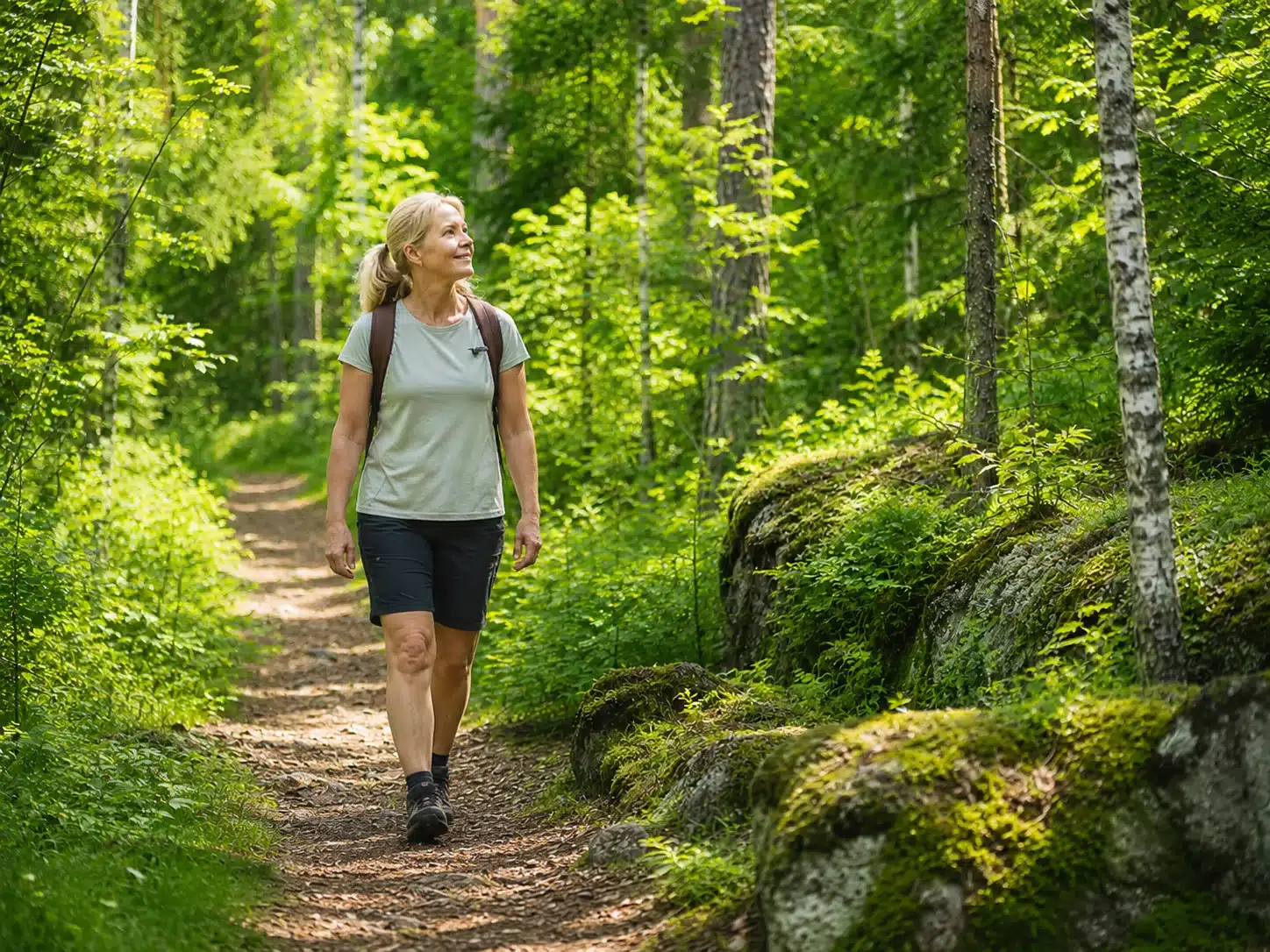
It’s just waiting for you to go out there.
A Japanese immunologist named Qing Li has spent 20 years proving exactly what happens when you go into the forest. He is a clinical professor at Nippon Medical School in Tokyo and president of the Japanese Society of Forest Medicine. The Japanese government has funded his research since 2004. The results are so strong that forest bathing (shinrin-yoku) is now an officially recommended clinical treatment in both Japan and Korea.
Shinrin-yoku
It all started in 1982 when the Japanese Ministry of Agriculture and Forestry coined the term shinrin-yoku . They wanted to get people to use the vast forests instead of just sitting inside and stressing themselves out. They had no idea how powerful it actually was – until Professor Qing Li ran the first real experiments in 2005. He took 12 healthy men on a three-day forest trip. Two nights. They walked slowly, maybe two hours a day. Nothing strenuous. No breathing exercises. Just regular walks among the trees. Li took blood and urine samples before the trip, during the trip, after seven days and after 30 days. The results were surprising.
NK cells increased by 50%
The activity of NK cells (your body’s own cancer cell and virus hunters) had increased by about 50 percent. Three powerful anti-cancer proteins that the cells produce – perforin, granzymes and granulysin – went up sharply. The effect lasted when they got home. It was still there after seven days and was still partially there after 30 days. Two hours a day in the forest gave an immune system that was upgraded for a whole month. Li repeated the experiment with women a year later. The same results.
T cells and NK cells (natural killer cells) are two of your most powerful immune cells. T cells are part of the adaptive immune system – they learn to recognize specific threats and attack them with precision. NK cells are your “natural killer cells.” They patrol your blood and tissues, instantly killing virus-infected and cancer cells without warning. They are your body’s rapid first-line defense.

What is the biological mechanism behind it?
What happens to cortisol during forest stays?
Then MaryCarol Hunter at the University of Michigan came along and did the cleanest version yet. She had ordinary city dwellers take a “nature pill” three times a week for eight weeks. They were allowed to choose the time, place, and duration—as long as it was outdoors during the day, without phones, without talking, and without strenuous exercise.

What does this mean for my body?
Practical tips
- Find a forest near you
Either you know where the forest is, or search Google Maps for forest, or forest walk and your location. - Add a forest walk to your week
Use some time on the weekend, or one of the days after work. Walk for at least 20 minutes or longer. The greatest effect comes between 20 and 30 minutes. - Don’t negotiateTake a walk in the forest every week. Your body remembers. The more often you go out, the stronger and longer the effect on your immune system, stress and energy.
- Forget the technology and the pantingGo slowly. No heart rate monitors, no podcasts. No phone in hand. Just breathe in the air. Look at the trees. Let the calm and the phytoncides do their job.
The effect is greater after rain or when it is warm because then the trees release extra phytoncides.
References
- Li Q. Effects of forest environment (Shinrin-yoku/Forest bathing) on health promotion and disease prevention – the Establishment of “Forest Medicine”. Environmental Health and Preventive Medicine, 2022;27:43. https://www.ncbi.nlm.nih.gov/pmc/articles/PMC9665958/
- Li Q et al. Forest bathing enhances human natural killer activity and expression of anti-cancer proteins. Int J Immunopathol Pharmacol. 2007
- New Concept of Forest Medicine. Forests 2023;14:1024.